

Travel and accommodation
Travelling to a conference takes more than booking a room and hoping for the best. This guide helps renal-care teams plan transport, accommodation and daily logistics so attendance runs smoothly.
Start with the listing details
Before anyone books transport or accommodation, read the conference listing properly. Check the town, the suburb, the venue type, the start and finish times for each day and whether any sessions begin earlier than normal registration times. A conference in central Bloemfontein needs different planning from one at a venue outside the city or near an airport route.
Our calendar gives the key venue details and a booking link to the organiser. We do not take bookings on behalf of organisers, so always confirm the final event information on the organiser booking page before paying deposits or approving travel.
- Confirm the exact venue area, not just the town name.
- Check whether registration opens the evening before or on the first morning.
- Look at finish times on the last day before booking return travel.
- See whether meals or parking are mentioned in the organiser information.
- Keep a saved copy of the organiser confirmation for your records.
Choose the right travel option
The best travel choice depends on distance, budget and who is attending. A single delegate travelling from a nearby town may do well with a same-day return trip, while a team coming from another province may need flights, transfers and overnight stay. Think about fatigue as well. After a full clinical or technical programme, a long drive home may not be sensible.
For teams from smaller centres, it often helps to compare total travel time rather than only the ticket price. A cheaper option with multiple changes can create late arrivals and missed opening sessions. If you are sending technicians with tools, demonstration materials or training notes, baggage limits also matter.
- Road travel can work well for short regional trips if parking is available.
- Air travel may be more practical for cross-country attendance.
- Group transport can simplify arrival times for unit teams.
- Allow extra time for airport queues, roadworks and bad weather.
- Plan for power cuts affecting fuel stops, lifts or card machines on the route.
Book accommodation close enough to the venue
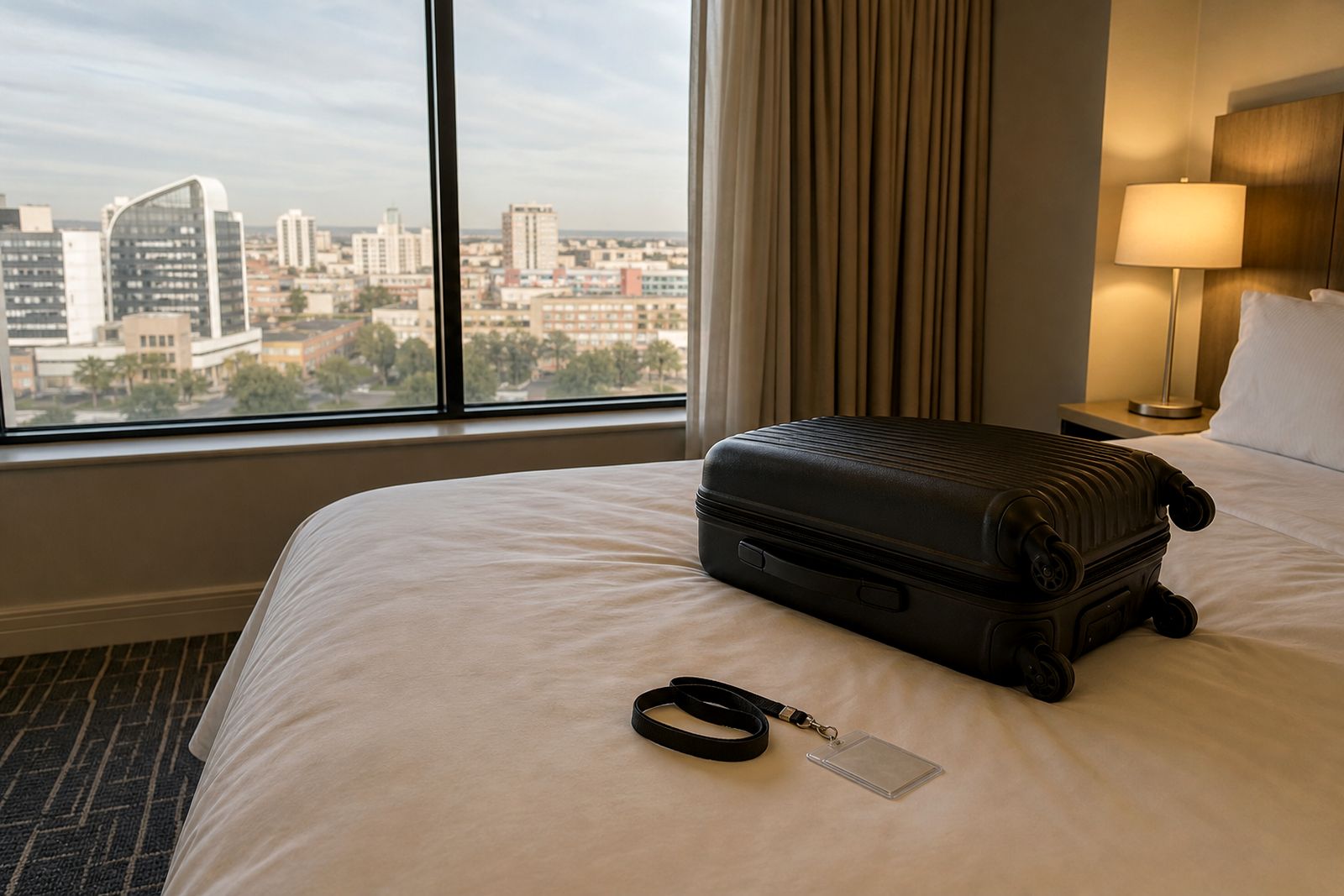
Staying near the venue usually saves time, reduces transport stress and helps delegates reach early sessions without rushing. In larger cities, a room only a few kilometres away can still mean heavy morning traffic. In coastal towns, humidity and rain can also make longer walks less pleasant especially if you are carrying conference material.
Check whether the area is practical for evening return after networking sessions or exhibition hours. If a venue is in a business district, you may prefer accommodation with on-site dining or easy access to a shuttle service. For multi-day attendance, make sure the room setup suits the delegate's needs, including a place to review notes and charge devices.
- Try to book within a practical travel distance of the venue.
- Ask about breakfast times if sessions start early.
- Check backup power for lights, Wi-Fi and lifts during power cuts.
- Confirm secure parking if travelling by car.
- Ask about cancellation terms before paying.
Work out the full attendance budget
Conference travel costs are not limited to the registration fee. A proper budget should include transport, accommodation, transfers, meals not covered by the event, parking, toll fees and small daily costs. This helps unit managers and administrators compare options fairly and avoid last-minute shortfalls.
It is also wise to budget for change fees or flexible travel where approval takes time. If a delegate still needs study leave signed off or shift cover arranged, a non-refundable booking may create problems. Keep everything on one document so the attendee, manager and finance contact can see the full picture at a glance.
A simple travel pack can prevent confusion. Include the organiser confirmation, accommodation booking, transport reference numbers and a rough day-by-day schedule. It sounds basic, but this step often saves a lot of back-and-forth later.
Plan daily logistics before you leave
Good conference travel is about more than getting there. Delegates should know how they will move between the station, airport, hotel and venue, what time they need to leave each morning and where they can get meals if the programme runs late. For teams attending from dialysis units, clear planning reduces stress on both the travellers and the colleagues covering duties back home.
Pack for the actual programme, not only the trip. Comfortable shoes matter for long exhibition halls or training areas, and a light jersey can help in cold conference rooms even in warm provinces. Keep printed confirmations or screenshots in case a mobile signal is weak.
- Save the venue address and route before travelling.
- Carry identification required for travel and check-in.
- Pack charging cables and a power bank.
- Keep receipts if your employer requires claim documents.
- Allow time for registration queues on the first morning.
After the conference, keep records and review the trip
Once the delegate returns, file the travel documents with the attendance records. This is useful for internal reporting, expense claims and future planning. If the conference included educational sessions relevant to clinical practice, technical support or unit management, note the main take-home points while they are still fresh.
It also helps to review what worked and what did not. Was the hotel too far from the venue? Did same-day return travel leave the delegate exhausted? Were transfer times realistic? A short review makes the next booking easier and can improve value for the unit. Small changes like arriving the night before or booking closer to the venue can make a big difference.
If you are still comparing conference options, use the listing details on our calendar as your starting point and then book directly with the organiser through their link.
What our Renal Training customers say
Verified Google reviews
Questions we get asked
Does Dialysis SA book travel or accommodation for delegates?
No. We list conference details and provide a booking link to the organiser. Travel and accommodation are arranged by the delegate, employer or travel coordinator.
Should I book accommodation before getting final approval to attend?
It is usually better to wait for internal approval, or choose an option with clear cancellation terms. This helps avoid costs if study leave, funding or shift cover is not confirmed.
How close should I stay to the conference venue?
As close as your budget allows, provided the area is practical and safe for your plans. Shorter travel times usually make early starts and multi-day attendance much easier.
Also worth a look

List an event or ask a question
Send a note through our contact form with the event, the organiser and the dates, or your question about the calendar, and our editor will contact you.
Open the contact form