

What to expect at an open day
Supplier open days give renal-care teams a practical way to see equipment, consumables and support options in person. On this page we explain what these sessions usually include, how our listings help you plan, and what to prepare before you book with the organiser.
What an open day usually includes
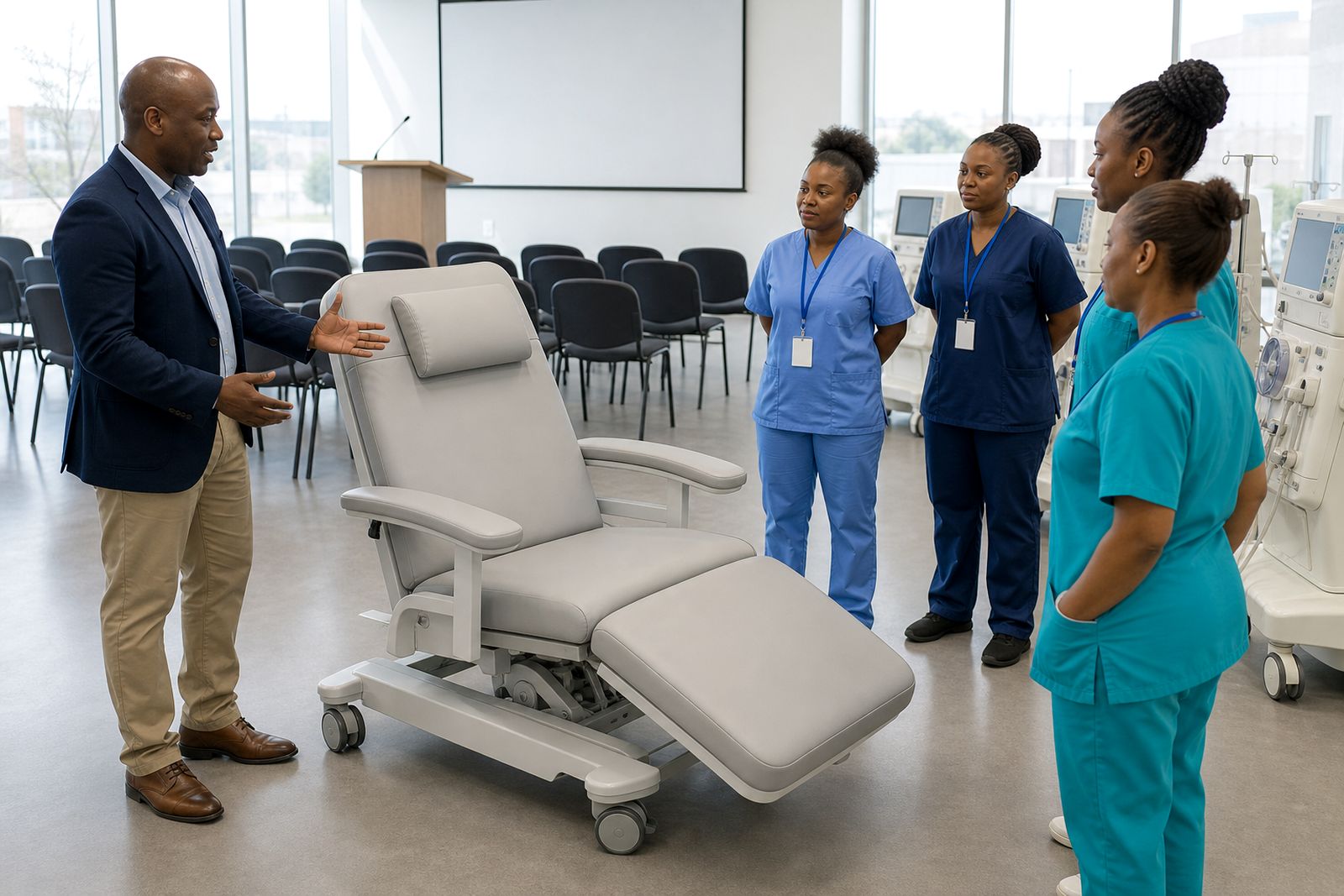
A renal-care open day is usually a short, practical session hosted by an organiser for nurses, technicians, unit managers and doctors who want a closer look at products, service support or training options. These sessions often focus on seeing items in use rather than sitting through long presentations. You may find a mix of product demonstrations, question time, printed information and informal discussion with the organiser’s team.
Because our calendar brings together listings from across South Africa, the format can vary from Bloemfontein to Durban, Gqeberha, Cape Town or Johannesburg. Some sessions are held at training venues, some near a unit or workshop, and some are part of a larger education day. Our role is to show the listing details and the booking link to the organiser. We do not host the session ourselves, and booking, attendance limits and final joining instructions come from the organiser.
- Live demonstrations of renal-related equipment or support items
- Questions about daily use, cleaning, maintenance and handling
- Printed handouts, brochures or sample materials where the organiser provides them
- A chance to compare options side by side
- Informal discussion with technical and clinical support staff
What our open day listings show
Each open day listing on Dialysis SA is there to help your team decide whether the session suits your role and travel plans. We keep the information practical so you can scan it quickly and decide if you should attend, ask a colleague to go, or forward it to your unit manager for approval. If details change, the organiser handles updates and booking arrangements.
A listing will generally point you to the basics you need before clicking through. That includes the location, the type of audience the session suits and the booking route. If you work in a smaller town and need to plan around transport or power cuts, reading the venue and timing notes first can save time later.
- The event type, such as an open day or demonstration session
- The town or city and venue details supplied for the listing
- The intended audience, for example technicians or nursing staff
- A booking link that takes you to the organiser
- Any general attendance notes shared for planning purposes
The booking process step by step
The process is straightforward. First, review the listing on our calendar and confirm that the open day is relevant to your work. Next, use the booking link on the listing to contact or register with the organiser directly. The organiser will then confirm availability, attendance limits, any joining instructions and whether there are materials to bring. If your manager needs details for study leave or roster planning, take those from the listing and the organiser’s booking page.
It also helps to check travel time carefully. In larger metros, traffic can affect arrival times, and in smaller centres parking may be limited near the venue. If you are travelling from another province, it is worth confirming whether the session is a short morning event or a longer programme before you make accommodation plans.
After you book, keep a copy of the organiser confirmation for your unit records. If your team is splitting attendance between clinical and technical staff, decide in advance who will focus on which questions. That way, one visit can cover more ground without anyone rushing through the session.
What to prepare before you attend
A good open day visit starts with a short list of questions from your team. Think about the issues you face in daily work such as cleaning routines, service turnaround, storage space, compatibility, staff training or operating steps. If the product will be used in a coastal area, humidity and corrosion may matter. If your facility deals with frequent power cuts, backup procedures and restart checks may be worth asking about.
You do not need a long document, but a few organised notes can make the session far more useful. If your unit manager wants feedback afterwards, agree beforehand on what information must come back to the team. This keeps the visit practical and stops important points being missed.
- A short list of clinical or technical questions from your team
- Your manager’s approval if time away from the unit is needed
- Travel details, parking notes and the expected session length
- A notebook or device for notes and photos if the organiser allows it
- Any internal checklist used by your unit for evaluating supplies or support
How costs and pricing usually work
Dialysis SA does not set pricing for open days and we do not take bookings or payments. Some sessions may be free to attend, while others may have limited places, paid add-on training or travel costs that your facility must cover separately. The organiser decides what is included and whether there are costs linked to attendance, materials or meals.
For your side, the real cost is often team time, transport and possible overnight stay rather than the booking itself. If staff are attending from Bloemfontein, Kimberley, Polokwane or East London, compare the travel cost against the value of seeing the equipment in person. A short, local open day can answer basic questions quickly while a larger session may justify a longer trip if several team members need information.
Always read the organiser terms before confirming. If your unit works through a procurement process, ask whether the open day is purely informational or whether follow-up quotations can be requested later.
After the open day
The value of an open day is often in what happens after you leave. Share your notes with the rest of the team while the details are still fresh. If samples or handouts were given, store them where the unit manager, technician or nursing lead can review them. Where the organiser discussed servicing, consumables or training support, note exactly what still needs confirmation.
Our calendar remains useful after attendance because teams often return to compare future open days, workshops and conferences before making a training plan. If you need help with a listing question on our site, use the enquiry form on our contact page. For anything about booking status, access rules, final venue directions or materials provided on the day, the organiser remains the correct point of contact.
A simple follow-up routine works well: record what you saw, what still needs answers and who in your unit must review the information. It sounds basic but it saves confusion later.
What our Renal Training customers say
Verified Google reviews
Questions we get asked
Do you run the open days listed on Dialysis SA?
No. We publish calendar listings and link you to the organiser. The organiser handles booking, attendance details and any event changes.
Can I book for my whole team through your site?
Bookings are made with each organiser through the link on the listing. If your team needs group attendance, check the organiser terms and availability first.
Will an open day include CPD points?
Some events may include educational value, but details depend on the organiser. Always read the listing and organiser information carefully and keep your own attendance records.
Also worth a look
List an event or ask a question
Send a note through our contact form with the event, the organiser and the dates, or your question about the calendar, and our editor will contact you.
Open the contact form